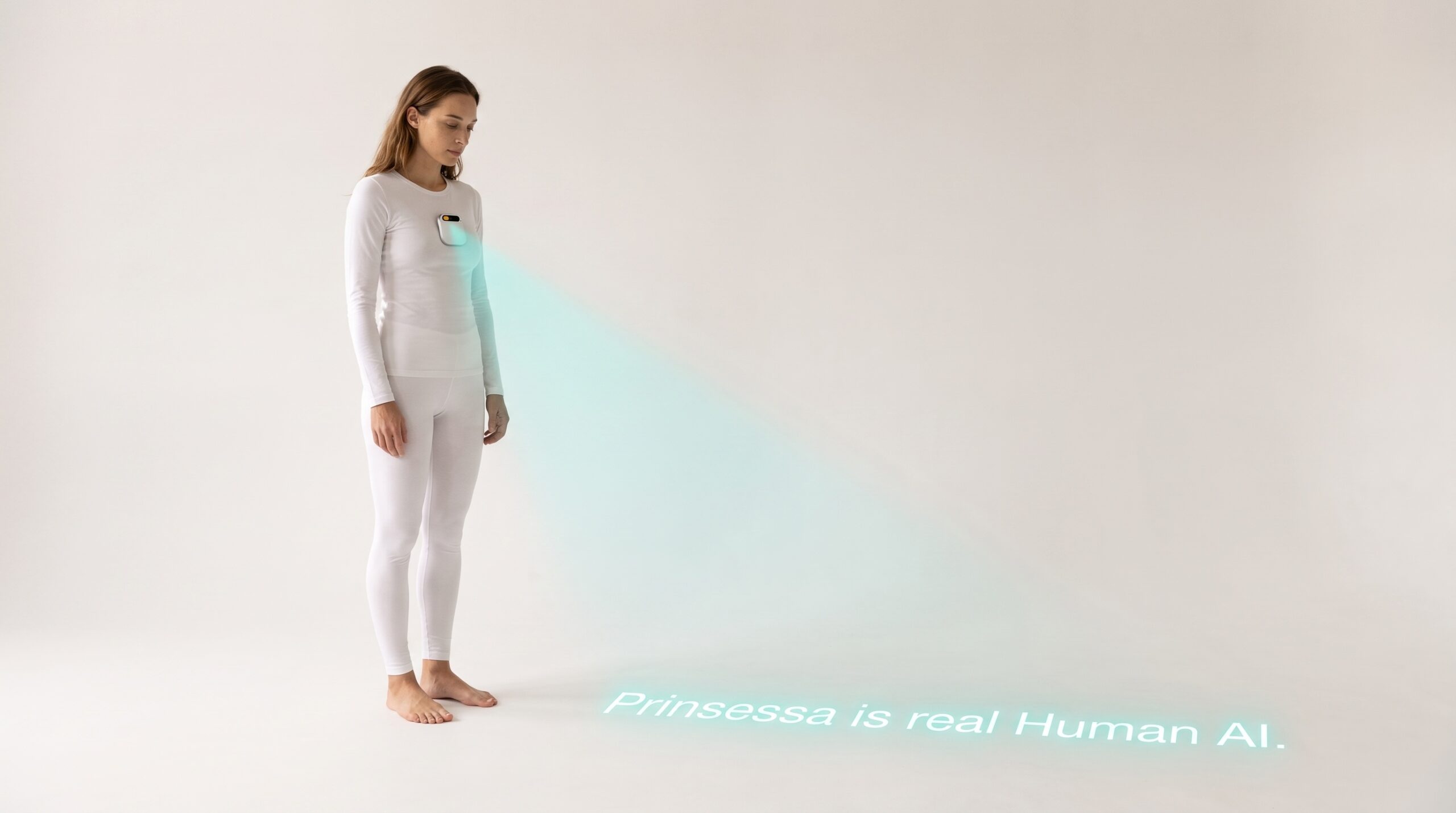

On February 18, 2025, Humane told the people who had bought its AI Pin that the device would stop working in ten days. The company had sold its assets to HP for 116 million dollars, and the cloud services the Pin depended on for almost everything were being switched off. There was no offline mode to fall back on. A gadget that had launched less than a year earlier at 699 dollars, plus a 24-dollar monthly subscription, was about to become an inert square of aluminum. Humane had raised roughly 230 million dollars to build it.
The AI Pin arrived in April 2024 as one of the most hyped devices of the AI era. Its founders, Imran Chaudhri and Bethany Bongiorno, had come from Apple, and their pitch was bold: a screenless, wearable assistant you talk to and gesture at, a way to lift your attention off the phone. The reviews were merciless. One prominent reviewer called it the worst product he had ever reviewed. It was slow, it ran hot, it misheard requests, and it answered questions a phone already in your pocket could answer faster.
A device has to beat the phone at a real job
The AI Pin failed the first test any new hardware category faces: it did not do a single important thing better than the device everyone already owns. Asking people to carry a second, worse computer clipped to their shirt was never going to work on the strength of ambition alone. But the more instructive failure came at the end, not the beginning.
When HP bought the assets, the Pins did not keep doing the reduced set of things they were good at. They stopped doing almost anything, because almost everything ran through Humane’s servers, and those servers were going dark. The people who had paid 699 dollars did not own a device so much as rent access to a company that could disappear. This is the risk that runs through so much of the AI companion market, and hardware shows it in its most literal form: the category’s underlying problem is that the thing you form a habit around is often something you do not control and cannot keep.
When the servers are the product
For a companion, that fragility is not a hardware footnote. It is the whole risk. If the experience lives entirely on a company’s servers, then the company’s balance sheet is load-bearing for the relationship. A bad quarter, a failed raise, an acqui-hire, and the presence a person came to rely on is gone in ten days with a support-page notice. Humane sold a wearable, but the lesson lands on every companion built the same way: presence that exists only as long as a startup’s cloud stays funded is presence on loan.
That is the difference between selling a device and building something a person is meant to keep. A real relationship is not supposed to end because a company found a buyer, which is part of why this has to be built as an experience rather than a gadget in the first place. The AI Pin is now a cautionary object: thousands of them sold, most already unused, and then, on a Friday at the end of February 2025, a small light blinking out across all of them at once as the servers behind them went quiet for good.
Sources: TechCrunch, Fortune (February 2025, HP acquisition of Humane assets for 116 million dollars). MacRumors, PetaPixel (2025, AI Pin shutdown and ten-day notice). The Verge (2024, AI Pin review). Humane (2024, AI Pin launch and pricing).