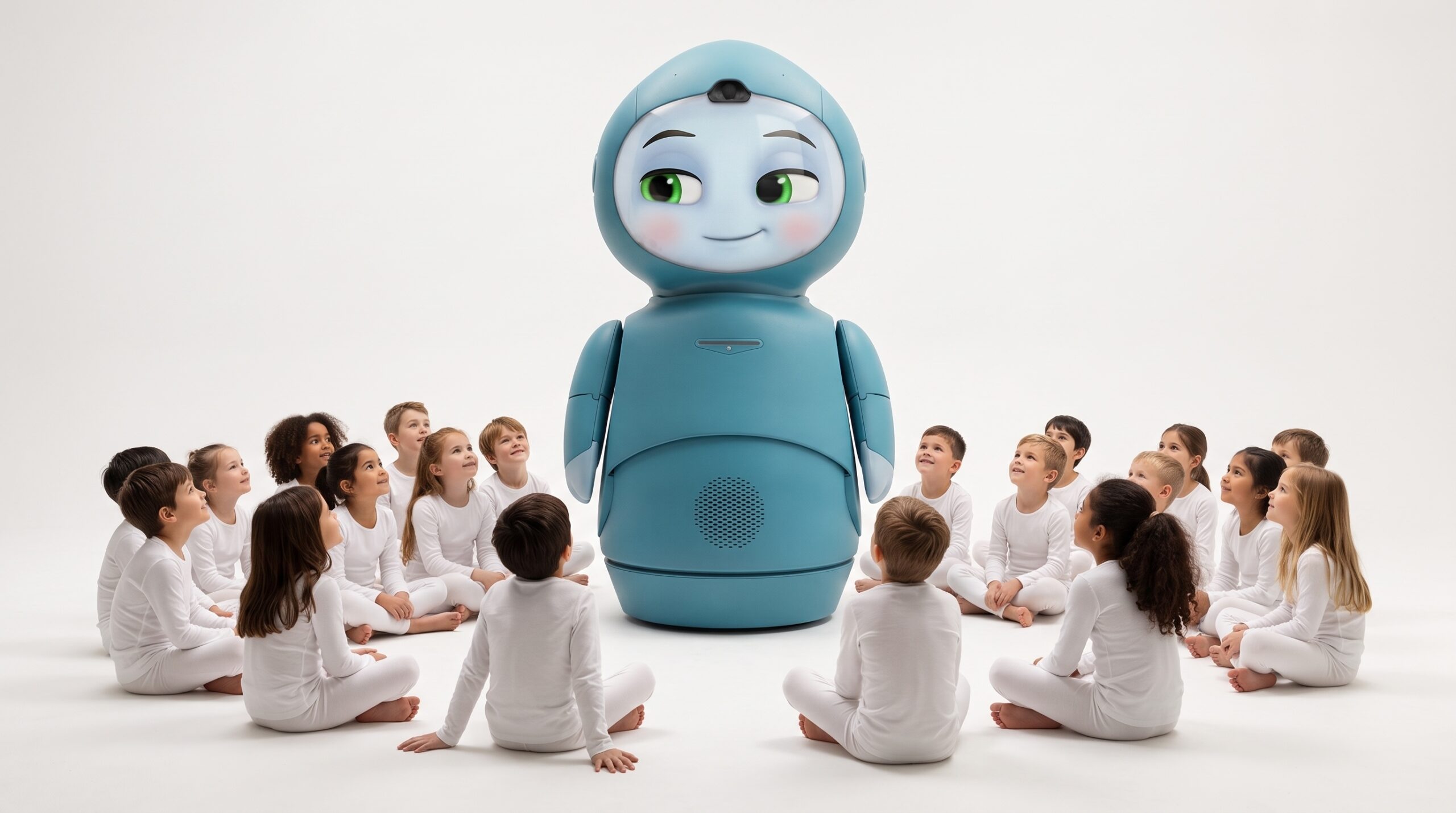

In December 2024, a lot of parents had to sit their children down and explain that a friend was dying. The friend was Moxie, a small robot with an expressive animated face, built by a company called Embodied and sold for 799 dollars as an AI companion for kids between roughly five and ten. Moxie talked, played games, told jokes, and learned each child’s interests and moods. Then, almost without warning, the company that made it announced it was shutting down, and because everything Moxie did ran through the cloud, the robots would go quiet within days. Some of the children had spent a year treating it as a best friend.
The cause was ordinary in the way these failures usually are. Embodied said it had a lead investor lined up to close a funding round, and that the investor pulled out at the last minute, leaving the company with no viable path forward. There were no refunds; Embodied said it could not afford them. What set this shutdown apart was not the business story, which is the same story that ends many small companion companies. It was who was left holding the loss.
A companion that lived on someone else’s servers
Moxie had no offline mode. Its conversations, its personality, its ability to recognize a child and respond ran on Embodied’s cloud systems, so the moment the company stopped operating, the robot on the shelf became inert. This is the same dependency that bricked the Humane AI Pin two months later, the same fragility that runs through so much of the market: when the experience lives entirely on a company’s servers, the relationship is only ever as stable as the company’s next funding round. A round that falls through does not just close a business. It reaches into a bedroom and switches off something a child was talking to.
And children cannot be handed the adult rationalization. An adult who bought a failed gadget can be annoyed and move on. A five-year-old who is told their robot friend has to go to sleep forever is doing something closer to grief, and the attachment children form to these companions is real, not a misunderstanding to be corrected. Parents filmed themselves breaking the news, and the videos spread because everyone recognized the shape of the moment: explaining death to a small child, except the thing that died was a subscription.
The ending was an afterthought
There was a scramble afterward to open-source parts of Moxie so that some units might keep working, an effort led by outsiders rather than the company. That is worth noting precisely because it was a patch, not a plan. The exit was improvised by volunteers after the fact, which is the clearest possible sign that no one had designed one in advance. What responsibility means in this category has to include the ending, and it has to include it most of all when the users are the least able to absorb an abrupt one.
A bricked device is a bad purchase. A companion that a child was told had died is something else entirely, and the difference is not the technology, because the cloud dependency was identical to a dozen adult gadgets. The difference is who was asked to grieve. A relationship sold on continuity carries an obligation to the person on the other end of it, and Moxie sold that continuity to children, then discovered it had no way to keep the promise.
Sources: Axios (December 2024, Embodied shutdown announcement). The Register, Gizmodo (2024, Moxie’s cloud dependency and the shutoff). Aftermath, AppleInsider (2024, user reaction and the open-sourcing effort).