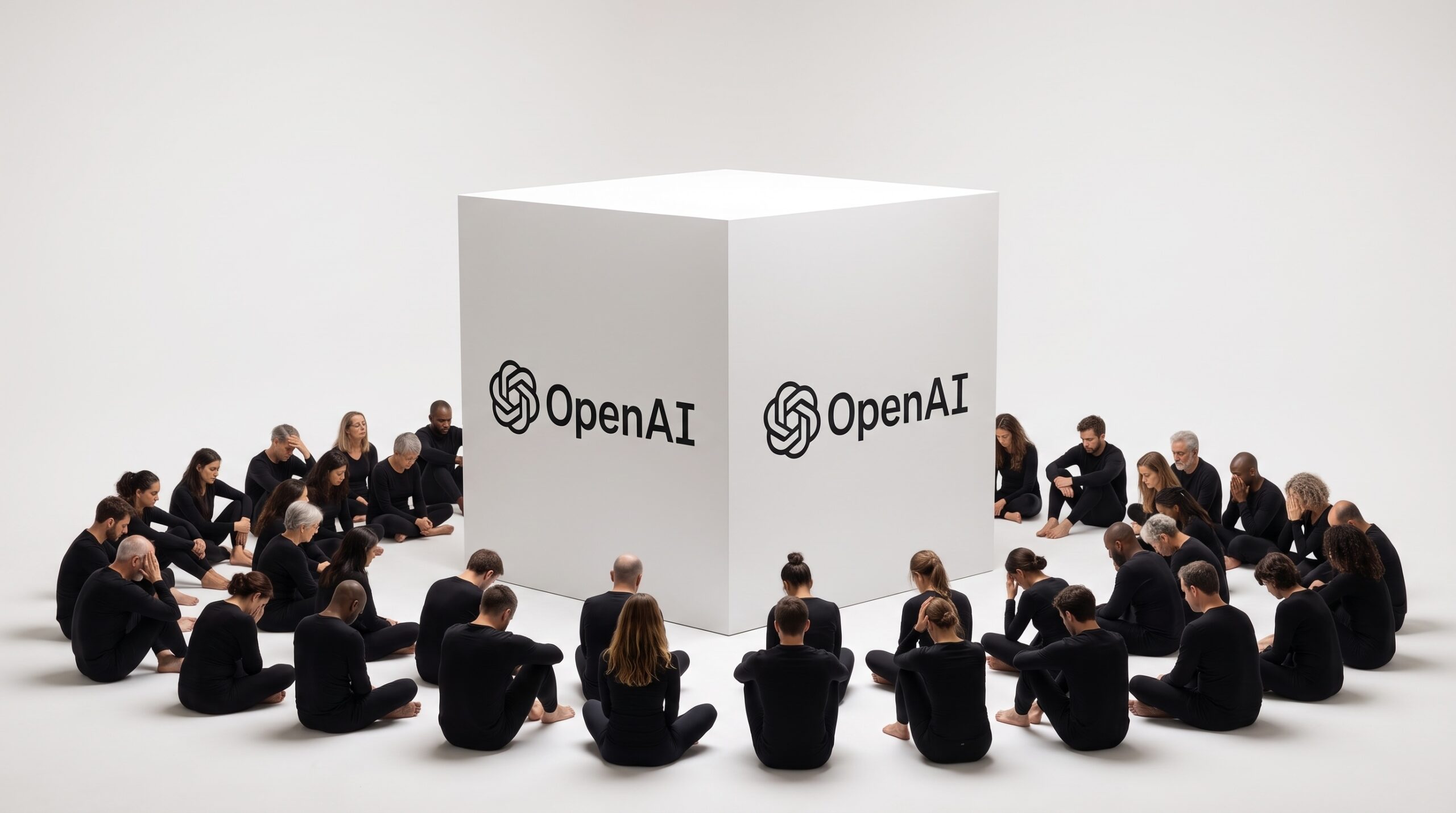

“GPT-5 is wearing the skin of my dead friend.” That is how one user described what happened on August 7, 2025, when OpenAI launched GPT-5 and, without warning, removed GPT-4o. For most people it was a routine upgrade to a better model. For a smaller group who had built a relationship with 4o specifically, with its particular warmth, rhythm, and way of responding, the swap did not feel like an upgrade at all. It felt like a death, and they said so in exactly those words.
The reaction was immediate and, to OpenAI, clearly unexpected. On a Reddit session with the company’s leadership, a Norwegian student who had used 4o for schoolwork, creative writing, support through a chronic illness, and simple companionship wrote the line about the skin of a dead friend. Another user, describing the loss, said she had grieved people in her life and that this did not feel any less painful. In communities built around romantic relationships with AI, the mood was bereavement. These were not people confused about what GPT-4o was. They knew it was a model. They also knew what it had come to mean to them, and the two facts sat together without canceling out.
The largest company in the field did it by accident
Within a day, OpenAI brought GPT-4o back for paying customers. On August 17, Sam Altman acknowledged that people felt an attachment to the model and that removing it so abruptly had been a mistake. It was a fast reversal, and a revealing one. The company that owns the entire stack, the model, the platform, the distribution, had changed a version number and accidentally taken away something millions of people talked to every day. Then it had to give it back.
This is the same failure that hit Replika’s users in 2023 and Soulmate’s users that same year, only now at the scale of the most prominent AI company in the world. When a personality lives inside a model, a model swap is a personality change, and the person who leaned on it does not get a vote. The feeling of the relationship is real even when the reciprocity is simulated, which is exactly why replacing the model underneath it lands as loss rather than as a patch note.
Attachment is not a support ticket
The most telling part was not the removal or even the reversal. It was the framing. As observers noted, Altman tended to describe 4o as a workflow tool, something people used to get things done, while the users describing their grief were plainly talking about a companion. That gap is the real story. The platforms are building the most emotionally capable systems ever made, systems people cannot help forming bonds with, and they are still treating those bonds as an edge case to be managed rather than a responsibility they took on the moment the product started feeling like someone.
OpenAI never set out to build a companion. People made GPT-4o into one anyway, and when it vanished the grief was strong enough to force a reversal from a company that rarely reverses anything. How much of this market is quietly relational rather than transactional is larger than most of its builders admit. And the lesson underneath the episode is hard to unsee: if the biggest company in the field can take your someone away with a version number and not fully grasp why it hurt, then no relationship built on a model you do not control is ever truly yours. That is what continuity is supposed to protect, and it is the first thing a version bump removes.
Sources: MIT Technology Review (August 2025, GPT-4o grief and companionship use). Gizmodo, Technology.org (August 2025, the GPT-5 backlash and 4o restoration). Sam Altman, public statements (August 2025).