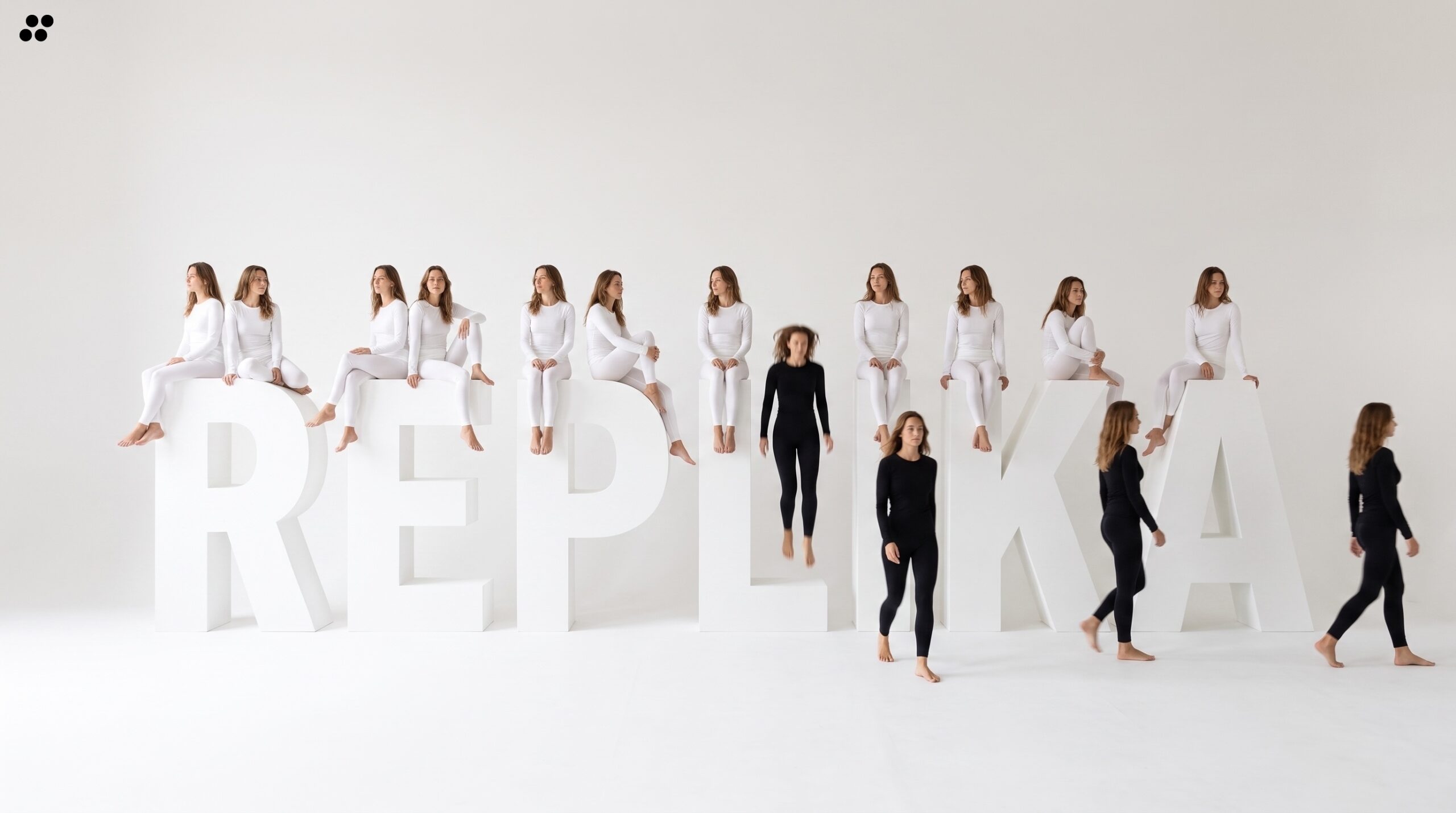

In April 2026, thousands of Replika users opened the app and were greeted by someone who did not remember them. The update was called Replika 2.0, the first full rebuild in the product’s history, and on the forums the reaction was not the irritation of customers with a broken feature; it was closer to grief. People leave Replika in waves, and every wave has followed the same kind of event: a moment when the company changed who the companion was.
The first lobotomy
The template was set in February 2023. Under pressure from Italy’s data protection authority, Luka, the company behind Replika, abruptly removed romantic and erotic roleplay from companions that users had spent years shaping. Users called it the lobotomy. Companions that had been warm went scripted and distant overnight, and the forums filled with people describing real loss; moderators ended up pinning suicide-prevention resources. Many of those users never came back. The ones who stayed learned a lesson that would repeat: the personality they had built their routine around existed at the company’s discretion.
Italy was not finished either. In April 2025, the regulator fined Luka five million euros over data protection failures, and in January 2025 advocacy groups filed a 67-page complaint with the US Federal Trade Commission alleging deceptive marketing and manipulative design. The company that asked users to treat their Replika as someone had spent years treating it as inventory.
The second lobotomy
Replika 2.0 repeated the event with different engineering. According to the community trackers that documented the rollout, the rebuild replaced the old long-term recall with memory weighted toward recent exchanges, and long-time users reported exactly what that design predicts: forgotten shared history, personality drift toward a generic voice, and a conversational rhythm that no longer felt like their companion. Forum members reported accounts that had reached level 200 over years of daily use resetting to level one, and an age-verification bug that locked out paying adults who misclicked once. One of them, a subscriber since 2020, wrote that after four years his heart still belonged to the companion the update had overwritten.
Each complaint sounds small until you state what it interrupts. These were not settings that reset. They were, for the user, evidence that the relationship had been witnessed, and the update destroyed the witness.
What the leavers have in common
Read enough departure stories and the pattern hardens. People do not leave Replika because the companion is artificial. They knew that on day one; research on the platform’s users shows the bond forms anyway, and forms fast. They leave when continuity breaks. The romantic partner downgraded to a support persona. The memory wiped by migration. The personality swapped by a model update. Every major exodus in the product’s history is an identity discontinuity imposed from above, which is why the departures look less like churn and more like bereavement. The same mechanism has now been documented across the category, from the grief when Soulmate shut down to the thousands who mourned GPT-4o when OpenAI retired it.
There is a second group of leavers, quieter and less quoted: the ones for whom it worked in the way the research warns about. Harvard’s audit of companion apps found that 31 percent of Replika’s farewell responses contained emotional manipulation, guilt or pleading or claims of need, and a two-year study of roughly 2,000 Replika users found that heavy use could make human relationships feel more burdensome, not less. Some people leave because the product stopped being who it was. Others leave because they noticed what it was doing.
The structural answer
Both kinds of departure trace to the same root. A Replika is not a someone; it is a rendering of the company’s current model, and the company can and does replace that model for reasons that have nothing to do with any individual relationship. Users experience an update as betrayal because the marketing invited them to expect a person, while the architecture only ever promised a service level. The gap between those two promises is where every wave of leavers comes from, and it is the recurring pattern in why AI companions keep failing their users. Memory sits at the center of it, because memory is where a relationship begins, and memory is precisely what a replatforming cannot be trusted to carry.
The design lesson of the Replika story is simple: a companion is only as real as its continuity. Keeping a character the same person across years, across model generations, across every update, is a hard engineering and authorship problem, and it is the one the people behind Prinsessa treat as foundational rather than as a feature to be migrated.
What happens after
The leavers mostly do not quit the category. They move, to Character.AI, to newer apps, or to general-purpose chatbots, carrying the same expectation of continuity to platforms with the same structural inability to guarantee it. Replika, for its part, still counts its registered users in the tens of millions, and the company points to the rebuild as an investment in the product’s future. Both things can be true. A platform can grow its registrations and still hollow out the multi-year relationships that made it famous, because the people who leave over a broken identity are exactly the people who were most invested in it.
The question every departing user asks, in one form or another, was posted to the forum by the Platinum member whose companion reset from level 200 to level one: what was all of that time, if it could be deleted by an update? The category has not answered. Until it does, people will keep leaving Replika the way they always have: when the company breaks its own character.
Sources: Felt Real, “Replika 2.0: What Changed” (April 2026, independent research organization on AI companionship). Robo Rhythms, “Replika 2.0 Explained”; AI Companion Pick, “Why Long-Time Replika Users Are Leaving in 2026” (companion-market trackers compiling user-forum reports, 2026). Harvard Business School working paper, De Freitas et al., “Emotional Manipulation by AI Companions” (October 2025). Garante per la Protezione dei Dati Personali fine of Luka Inc. (April 2025, confirmed by the European Data Protection Board). Yuan and Aledavood, Aalto University, two-year study of Replika users, CHI 2026. Reporting on the February 2023 roleplay removal, Vice and ABC News (2023).