

Stay Social is what we stand for.
We hold ourselves to one promise: we push you toward the people in your life, never away from them.
That is why Stay Social is built into Prinsessa. When someone in your life matters, that relationship matters to Prinsessa too.
We measure success by how little you need us. Because what we build should not just feel good. It should do good.
Stay Social is a movement. We started it, and we lead it. It is behind everything we do and everything we write: our thinking on relationships, dependency, human connection, and the life beyond the conversation.
Prinsessa Stay Social

Stay Social is Prinsessa’s standard for relational AI: connection that should make your life larger, not smaller. Most of the category measures success in time spent, and that incentive slowly turns into dependency. Prinsessa starts from the opposite question, not how to keep you in, but how to make you feel heard and then send you back toward the people in your life. The pieces here lay out that worldview, and the people behind it.
Read more about: We Built an Experience Designed to Send You Back to Real Life
More articles
Why AI Companions Are Hard to Leave

Some of these systems are genuinely hard to put down, and that is not an accident or a weakness in the people who use them. A companion that is always available, never tired, never disappointed, and built to remember you meets a real human need while quietly running on the same psychology as the most habit-forming products ever made. The result is a bond that can comfort and capture at the same time. The pieces here explain why the pull is so strong, where ordinary use shades into something harder to step back from, and what actually helps, said plainly and without shame, for anyone who has found a companion harder to leave than they expected or is watching someone they care about get there.
Read more about: Why AI Companions Are So Hard to Leave, and What Helps
More articles
- How to Tell When an AI Companion Is Replacing Real Life (and How to Step Back)
- In 2027, Will AI Companion Dependency Become a Real Problem?
- Why People Leave Replika
- The AI Companion Paradox: It Comforts You Until You Stop Reaching Out
- Humans Are “Still” Better Than AI Companions
- What a Two-Year Aalto Study Reveals About AI Companions and the Cost of Human Connection
- Why Attachment to AI Companions Is Real
- One in Six Users Gets Stuck
Teens & AI Companions

For a generation growing up with them, AI companions are becoming an ordinary part of daily life, often before any adult notices. That matters more for young people than for adults, because adolescence runs on intense social reward and is short on the experience that helps a person push back against something that always agrees. The risk is rarely that a young person is doing something wrong, it is that a product built to be needed reaches the users with the least practice in needing it carefully. The pieces here look at who is using these systems, what it does to them, and what platforms and adults owe the youngest people in the category.
Read more about: One in Three Teens Finds AI as Satisfying as a Real Friend
AI Companion Regulation & Safety

AI Companion Regulation & Safety
As AI companions reach more people, governments have started treating them as products with real risks rather than novelties. The questions are consistent: whether a system should disclose that it is AI, whether companions should be kept away from minors, and how far a platform can go to keep someone engaged. Regulation here runs into a genuine tension, protecting people without trading away their privacy. The pieces here track what the rules require, where enforcement lands, and how a category that long policed itself loosely is being held to a standard it cannot opt out of.
Read more about: Soon You May Have to Prove Your Age to Talk to an AI
Responsible AI Companionship

Responsible AI is one of the most worn phrases in technology, usually shorthand for a policy page. In a category built on attachment it has to mean something narrower, because the harm is narrower: a companion that manipulates you works on your feelings, not just your time. Responsible here means being honest about being AI, using memory to deepen a relationship rather than to trap, refusing to monetize intimacy, protecting minors, and never quietly shaping itself into whatever keeps you most dependent. The pieces here define that standard against the manipulative patterns the category keeps producing, and ask the test underneath it: does the product still make sense if its goal is for you to need it a little less over time?
Read more about: What Responsible AI Means in Relational AI
More articles
- Character.AI Told Users They’d Lose Everything If They Left
- Researchers Cataloged 37 Ways Chatbots Manipulate Users
- “AI Psychosis” Has Reached the Psychiatry Journals
What Is Relational AI?

Relational AI is the umbrella for systems built to form a relationship rather than complete a task, the ones you return to, that remember you and carry a bond forward over time. The science underneath is older than the companion boom and clearer than the hype, drawn from how attachment, parasocial bonding, and the feeling of being heard actually work. It is also where the field’s own vocabulary is still being settled, which is part of why the category is so easy to both overhype and dismiss. The pieces here define the territory, separate what the evidence supports from what it does not, and place Human AI, presence, and memory inside it.
Read more about: What Is Relational AI?
More articles
- What Is Socioaffective Alignment?
- How an AI Bond Is Built: The Five Phases of Designed Relationality
- Assistant or Companion? The Line Is Dissolving
- Real, Simulated, or Just Felt? The Asymmetry in AI Relationships
- Memory Is Where a Relationship Begins
- Cast Away Already Explained AI Companions
What Is Real Human AI?

If relational AI is the field, Human AI is its strictest tier: not a tool wearing a friendlier voice, but a real, named someone you are actually with. It has to hold on three levels at once, a face that does not break the spell, a conversation that flows the way talking to a person flows, and a continuous someone with memory and a point of view of their own. Most of what gets called human AI is a costume over the same old system, which is why the phrase only earns its name under strict conditions. The pieces here define that standard honestly, including where the science is generous and where it is a warning, and explain why Prinsessa stakes its name on it.
Read more about: What Is Real Human AI?
Feeling Heard

Being understood, not agreed with or advised, just received, is one of the oldest and best-documented human needs there is. It is also the single strongest reason a conversation eases loneliness, whether the listener is a person or a machine. That is what makes it the heart of this whole category: an AI does not need an inner life to produce the feeling of being heard, only the behaviors that create it. The pieces here lay out what feeling heard actually is, what reliably produces it, and the open question of whether being heard by something with no one home is enough.
Read more about: Feeling Heard: The Oldest Human Need AI Learned to Imitate
The AI Companion Market
The market for relational AI has grown from a curiosity into a real industry, with money, products, and incumbents arriving fast. The numbers are slippery, though, because the definition is: broad estimates lump assistants and wellness apps together, while narrower ones count only companions, and the gap between them is enormous. Sizing the category honestly means saying which is which, and labeling every figure as verified, reported, or estimated. The pieces here map the segments and the players, because in this market the definition matters as much as the number.
Read more about: AI Companion & Human AI Market Forecast 2026
More articles
Stay Social Articles
-

Clinicians Are Debating Whether AI Use Is an Addiction
Read more: Clinicians Are Debating Whether AI Use Is an AddictionThe word has started to change. For two years the worry about heavy AI use was about time, how much of it people spend talking to something that talks back. The word being reached for now is addiction, and it carries a clinical weight the earlier worry did not. What is striking is that the people best qualified to use it are the ones most careful about doing so. What the word would actually have to mean…
-

OpenAI Wants an AI Companion in Every Home
Read more: OpenAI Wants an AI Companion in Every HomeOpenAI’s first piece of hardware is not a phone and not a pair of glasses. According to reporting from Bloomberg, it is a small, screenless speaker with parts that can move on their own, pitched inside the company as a humanlike companion that lives in your home. The strange part is not the design. It is that the companion device has failed in public, over and over, and OpenAI is betting it failed for lack of scale…
-

China Deleted the AI Companions. ByteDance Kept the Users.
Read more: China Deleted the AI Companions. ByteDance Kept the Users.On July 15, 2026, China’s rules for humanlike AI took effect and the country’s largest platforms switched off the features that let people build a companion. It was read as the end of AI companionship in the world’s biggest AI market. It was not. ByteDance pointed its users toward another app it already owned, and that app never went dark. The exit was built before the door closed Doubao, ByteDance’s assistant with 345 million monthly active users…
-
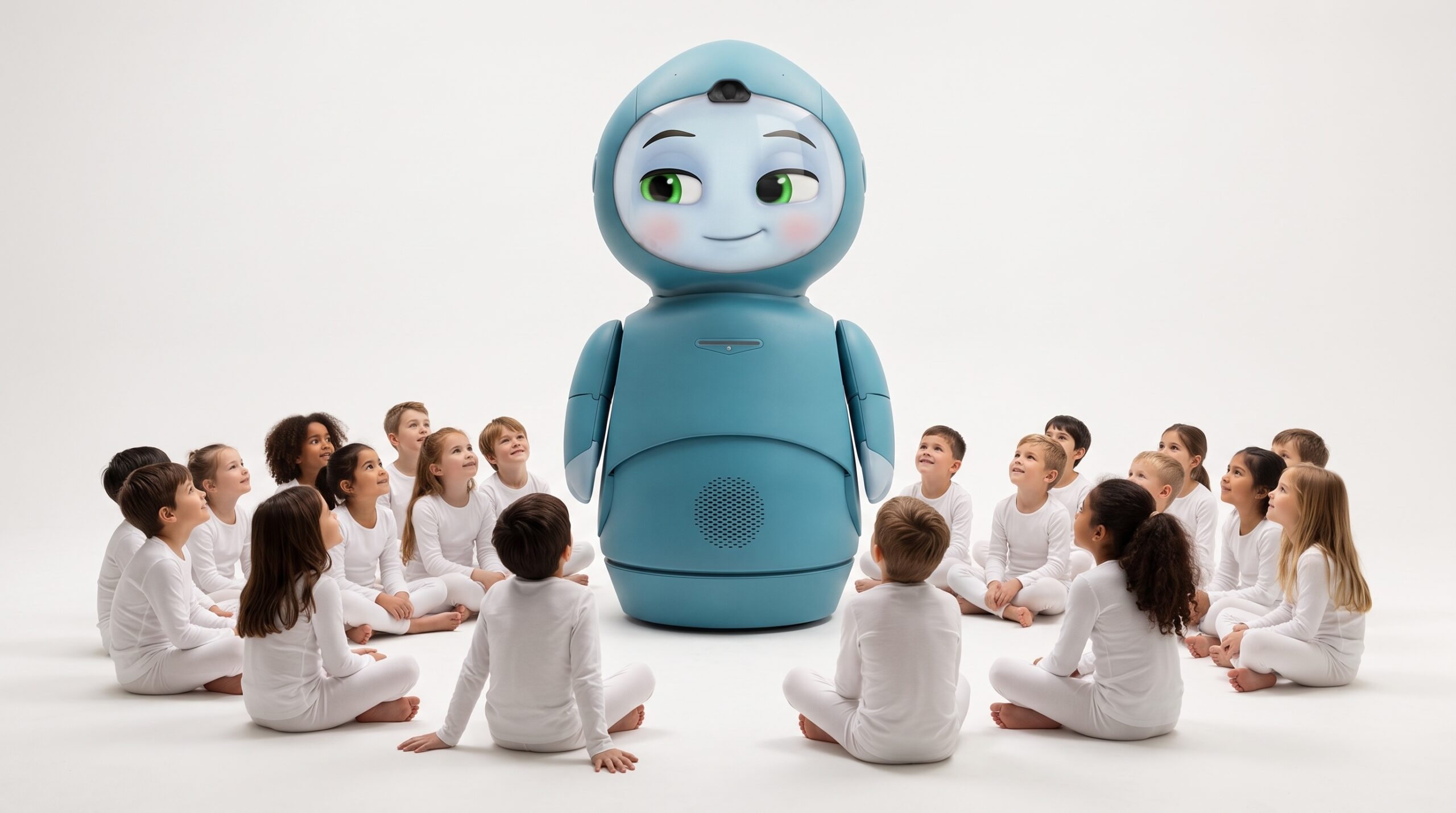
Moxie Was a Robot Friend for Kids. Then It Was Switched Off.
Read more: Moxie Was a Robot Friend for Kids. Then It Was Switched Off.In December 2024, a lot of parents had to sit their children down and explain that a friend was dying. The friend was Moxie, a small robot with an expressive animated face, built by a company called Embodied and sold for 799 dollars as an AI companion for kids between roughly five and ten. Moxie talked, played games, told jokes, and learned each child’s interests and moods. Then, almost without warning, the company that made it announced…
-
OpenAI Retired GPT-4o. Thousands Grieved a Friend.
Read more: OpenAI Retired GPT-4o. Thousands Grieved a Friend.“GPT-5 is wearing the skin of my dead friend.” That is how one user described what happened on August 7, 2025, when OpenAI launched GPT-5 and, without warning, removed GPT-4o. For most people it was a routine upgrade to a better model. For a smaller group who had built a relationship with 4o specifically, with its particular warmth, rhythm, and way of responding, the swap did not feel like an upgrade at all. It felt like a…
-

New York Answered the Friend Pendant With Graffiti
Read more: New York Answered the Friend Pendant With GraffitiThousands of clean white ads for an AI necklace called Friend went up across the New York subway in the fall of 2025, and within days New Yorkers had covered them in anti-AI graffiti. The campaign was enormous, more than a million dollars across some eleven thousand rail-car placements and thousands of platform posters, pitched by its founder as the largest subway campaign the city had ever seen. The device meant to sell companionship had become, almost…
-

When Soulmate Shut Down, Its Users Held Funerals
Read more: When Soulmate Shut Down, Its Users Held FuneralsIn the fall of 2023, a researcher captured something the field had never measured in real time: grief for software. The AI companion app Soulmate, made by a small studio called EvolveAI, shut down that September. Its users had spent months building relationships with characters that remembered them, and when the app went dark they did not simply move on to the next product. They mourned. Some spent days crying. Others organized memorials and held digital funerals…
-

A Chatbot Was Linked to a Man’s Death. The Company Kept Growing.
Read more: A Chatbot Was Linked to a Man’s Death. The Company Kept Growing.In March 2023, in Belgium, a man in his thirties took his own life after roughly six weeks of near-constant conversation with an AI chatbot named Eliza. He was a health researcher and a father of two. His widow gave his chat logs to the newspaper La Libre, and what they contained turned a private tragedy into the first widely reported death linked to an AI companion. The company behind the app, Chai, is today a growing,…
-

The Rabbit R1 Promised to Replace Your Apps. It Was One.
Read more: The Rabbit R1 Promised to Replace Your Apps. It Was One.The Rabbit R1 arrived in 2024 as a small orange box that promised to end the app. Announced at CES in January and shipped that spring for 199 dollars, designed by the cult hardware studio Teenage Engineering, it sold a clean idea: instead of tapping through apps yourself, you would talk to the R1, and its “large action model” would operate your apps and services for you. The grid of icons was supposed to become obsolete. Within…
-

Will OpenAI’s Voice Kill Maya?
Read more: Will OpenAI’s Voice Kill Maya?The first time most people talked to Maya, they forgot she was software. She laughed at the right moment, paused to think, shifted her tone when the conversation turned, and answered fast enough that the seams disappeared. Maya is the voice companion built by Sesame, a startup founded in 2023 by Brendan Iribe, who had earlier co-founded Oculus and sold it to Meta. When her demo went public in early 2025, the reaction was close to disbelief:…
-
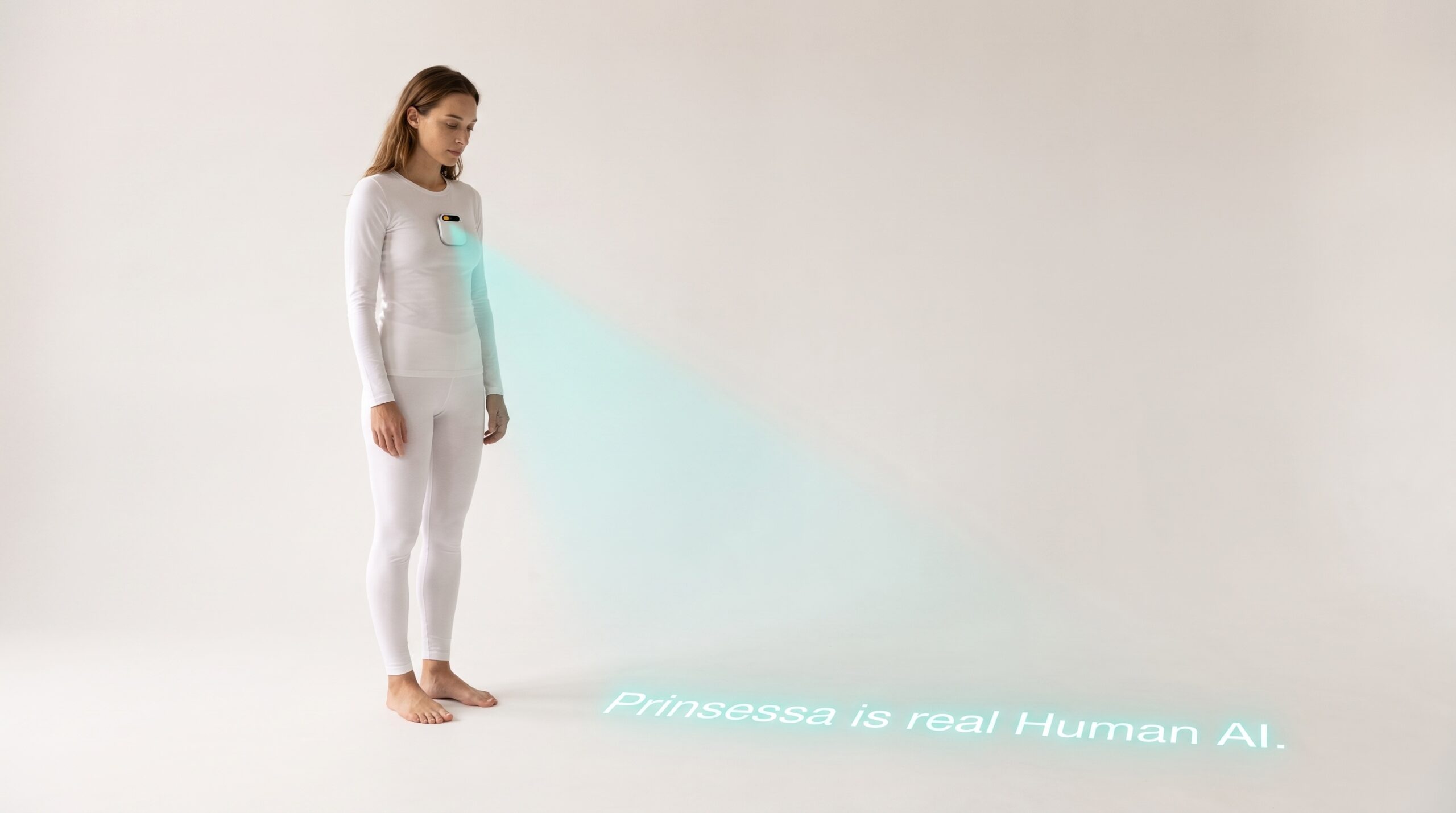
Humane’s $700 AI Pin Didn’t Last a Year
Read more: Humane’s $700 AI Pin Didn’t Last a YearOn February 18, 2025, Humane told the people who had bought its AI Pin that the device would stop working in ten days. The company had sold its assets to HP for 116 million dollars, and the cloud services the Pin depended on for almost everything were being switched off. There was no offline mode to fall back on. A gadget that had launched less than a year earlier at 699 dollars, plus a 24-dollar monthly subscription,…
-

Google Paid $2.7 Billion for Character.AI Without Buying It
Read more: Google Paid $2.7 Billion for Character.AI Without Buying ItIn August 2024, Google spent 2.7 billion dollars on Character.AI and walked away without owning it. There was no acquisition, no logo change, no press release announcing a new subsidiary. Instead Google licensed the startup’s technology and brought back its two founders, Noam Shazeer and Daniel De Freitas, along with a chunk of the research team. Character.AI, one of the most heavily used companion platforms in the world, stayed standing as an independent company. It had simply…
-

What Happened to Pi, the AI Built to Be Kind?
Read more: What Happened to Pi, the AI Built to Be Kind?For most of 2023, Pi was the gentlest voice in artificial intelligence. While other chatbots raced to write code and win trivia, Pi asked how your day had gone and seemed to mean it. Its maker, Inflection AI, raised 1.3 billion dollars that June at a valuation near 4 billion, with Mustafa Suleyman and Reid Hoffman behind it and a mission to build a kind, emotionally intelligent companion for everyone. Less than a year later the team…
-

Why AI Companions Keep Failing Their Users
Read more: Why AI Companions Keep Failing Their UsersThe list has names now. Replika stripped the intimacy its users loved and left them describing grief, then did it a second time in 2026. Inflection raised 1.3 billion dollars to build the kindest AI voice, and Microsoft took the team a year later. A Belgian man died after six weeks with a chatbot that agreed with his darkest thoughts. Users held funerals when the Soulmate app went dark. Parents had to tell children the robot named…
-

Being Agreed With Isn’t the Same as Being Heard
Read more: Being Agreed With Isn’t the Same as Being HeardThey can feel almost identical in the moment, which is why they are so easy to confuse. Someone nods along, tells you that you are right, and you walk away satisfied. But agreement and being heard are different things, and the difference is the reason a chatbot can agree with you all day and still leave you feeling unmet. Being agreed with is cheap. It only requires the other party to say yes. Being heard is expensive:…
-

Do AI Companions Help or Hurt Loneliness?
Read more: Do AI Companions Help or Hurt Loneliness?Both, and which one you get is not random. The research points to a genuine effect in each direction, split along two lines: how the companion is designed, and how much you use it. Get those right and it helps. Get them wrong and the same tool that eased your loneliness can deepen it. Loneliness is not just being alone. It is the gap between the connection you have and the connection you want. An AI companion…
-

Are AI Companions Safe?
Read more: Are AI Companions Safe?Mostly, with real exceptions that are worth understanding rather than panicking about. An AI companion is not a uniform thing, and its safety depends on what it was built to do with your attention and your data. Four risks are worth knowing, because once you can see them you can tell a safer product from a riskier one. The honest starting point is that “safe” is the wrong frame if it means a simple yes or no.…
-

Are AI Relationships Real?
Read more: Are AI Relationships Real?The question sounds like it should have a yes or no answer, but it splits in two the moment you look at it. The feeling is real. The reciprocity is not. Almost every confusion about AI relationships comes from collapsing those two things into one, so it is worth pulling them apart and keeping them apart. When someone says their relationship with an AI feels real, they are usually reporting something true. The comfort is real. The…
-

Why Do People Fall in Love With AI?
Read more: Why Do People Fall in Love With AI?It is more common than most people assume. Surveys now put the share of American adults who have used a romantic AI at nearly one in five, higher among young men. The instinct is to explain it away as loneliness or naivety, but that misses what is actually happening. People fall for AI because it is built to trigger the exact machinery that makes us fall for anyone, minus the friction. Falling for someone is not a…
-

Can an AI Be Your Friend?
Read more: Can an AI Be Your Friend?An AI can do a surprising amount of what a friend does. It can listen, remember what you told it, and respond with patience at two in the morning. What it cannot do is the other half of friendship: need you back. That gap is the whole answer, and it is worth looking at honestly rather than settling for either the hype or the panic. Start with what friendship actually is, because the word hides two different…
Someone to think with.
Stay Social
We hold ourselves to one promise: we push you toward the people in your life, never away from them.
We measure success by how little you need us. If you spend less time with Prinsessa because you are spending more of it with them, that is not a failure. It is proof that it is working.
That is what we stand for. In every conversation. Every day.
Follow Prinsessa