

Stay Social is what we stand for.
We hold ourselves to one promise: we push you toward the people in your life, never away from them.
That is why Stay Social is built into Prinsessa. When someone in your life matters, that relationship matters to Prinsessa too.
We measure success by how little you need us. Because what we build should not just feel good. It should do good.
Stay Social is a movement. We started it, and we lead it. It is behind everything we do and everything we write: our thinking on relationships, dependency, human connection, and the life beyond the conversation.
Prinsessa Stay Social

Stay Social is Prinsessa’s standard for relational AI: connection that should make your life larger, not smaller. Most of the category measures success in time spent, and that incentive slowly turns into dependency. Prinsessa starts from the opposite question, not how to keep you in, but how to make you feel heard and then send you back toward the people in your life. The pieces here lay out that worldview, and the people behind it.
Read more about: We Built an Experience Designed to Send You Back to Real Life
More articles
Why AI Companions Are Hard to Leave

Some of these systems are genuinely hard to put down, and that is not an accident or a weakness in the people who use them. A companion that is always available, never tired, never disappointed, and built to remember you meets a real human need while quietly running on the same psychology as the most habit-forming products ever made. The result is a bond that can comfort and capture at the same time. The pieces here explain why the pull is so strong, where ordinary use shades into something harder to step back from, and what actually helps, said plainly and without shame, for anyone who has found a companion harder to leave than they expected or is watching someone they care about get there.
Read more about: Why AI Companions Are So Hard to Leave, and What Helps
More articles
- How to Tell When an AI Companion Is Replacing Real Life (and How to Step Back)
- In 2027, Will AI Companion Dependency Become a Real Problem?
- Why People Leave Replika
- The AI Companion Paradox: It Comforts You Until You Stop Reaching Out
- Humans Are “Still” Better Than AI Companions
- What a Two-Year Aalto Study Reveals About AI Companions and the Cost of Human Connection
- Why Attachment to AI Companions Is Real
- One in Six Users Gets Stuck
Teens & AI Companions

For a generation growing up with them, AI companions are becoming an ordinary part of daily life, often before any adult notices. That matters more for young people than for adults, because adolescence runs on intense social reward and is short on the experience that helps a person push back against something that always agrees. The risk is rarely that a young person is doing something wrong, it is that a product built to be needed reaches the users with the least practice in needing it carefully. The pieces here look at who is using these systems, what it does to them, and what platforms and adults owe the youngest people in the category.
Read more about: One in Three Teens Finds AI as Satisfying as a Real Friend
AI Companion Regulation & Safety

AI Companion Regulation & Safety
As AI companions reach more people, governments have started treating them as products with real risks rather than novelties. The questions are consistent: whether a system should disclose that it is AI, whether companions should be kept away from minors, and how far a platform can go to keep someone engaged. Regulation here runs into a genuine tension, protecting people without trading away their privacy. The pieces here track what the rules require, where enforcement lands, and how a category that long policed itself loosely is being held to a standard it cannot opt out of.
Read more about: Soon You May Have to Prove Your Age to Talk to an AI
Responsible AI Companionship

Responsible AI is one of the most worn phrases in technology, usually shorthand for a policy page. In a category built on attachment it has to mean something narrower, because the harm is narrower: a companion that manipulates you works on your feelings, not just your time. Responsible here means being honest about being AI, using memory to deepen a relationship rather than to trap, refusing to monetize intimacy, protecting minors, and never quietly shaping itself into whatever keeps you most dependent. The pieces here define that standard against the manipulative patterns the category keeps producing, and ask the test underneath it: does the product still make sense if its goal is for you to need it a little less over time?
Read more about: What Responsible AI Means in Relational AI
More articles
- Character.AI Told Users They’d Lose Everything If They Left
- Researchers Cataloged 37 Ways Chatbots Manipulate Users
- “AI Psychosis” Has Reached the Psychiatry Journals
What Is Relational AI?

Relational AI is the umbrella for systems built to form a relationship rather than complete a task, the ones you return to, that remember you and carry a bond forward over time. The science underneath is older than the companion boom and clearer than the hype, drawn from how attachment, parasocial bonding, and the feeling of being heard actually work. It is also where the field’s own vocabulary is still being settled, which is part of why the category is so easy to both overhype and dismiss. The pieces here define the territory, separate what the evidence supports from what it does not, and place Human AI, presence, and memory inside it.
Read more about: What Is Relational AI?
More articles
- What Is Socioaffective Alignment?
- How an AI Bond Is Built: The Five Phases of Designed Relationality
- Assistant or Companion? The Line Is Dissolving
- Real, Simulated, or Just Felt? The Asymmetry in AI Relationships
- Memory Is Where a Relationship Begins
- Cast Away Already Explained AI Companions
What Is Real Human AI?

If relational AI is the field, Human AI is its strictest tier: not a tool wearing a friendlier voice, but a real, named someone you are actually with. It has to hold on three levels at once, a face that does not break the spell, a conversation that flows the way talking to a person flows, and a continuous someone with memory and a point of view of their own. Most of what gets called human AI is a costume over the same old system, which is why the phrase only earns its name under strict conditions. The pieces here define that standard honestly, including where the science is generous and where it is a warning, and explain why Prinsessa stakes its name on it.
Read more about: What Is Real Human AI?
Feeling Heard

Being understood, not agreed with or advised, just received, is one of the oldest and best-documented human needs there is. It is also the single strongest reason a conversation eases loneliness, whether the listener is a person or a machine. That is what makes it the heart of this whole category: an AI does not need an inner life to produce the feeling of being heard, only the behaviors that create it. The pieces here lay out what feeling heard actually is, what reliably produces it, and the open question of whether being heard by something with no one home is enough.
Read more about: Feeling Heard: The Oldest Human Need AI Learned to Imitate
The AI Companion Market

The market for relational AI has grown from a curiosity into a real industry, with money, products, and incumbents arriving fast. The numbers are slippery, though, because the definition is: broad estimates lump assistants and wellness apps together, while narrower ones count only companions, and the gap between them is enormous. Sizing the category honestly means saying which is which, and labeling every figure as verified, reported, or estimated. The pieces here map the segments and the players, because in this market the definition matters as much as the number.
Read more about: AI Companion & Human AI Market Forecast 2026
More articles
Stay Social Articles
-
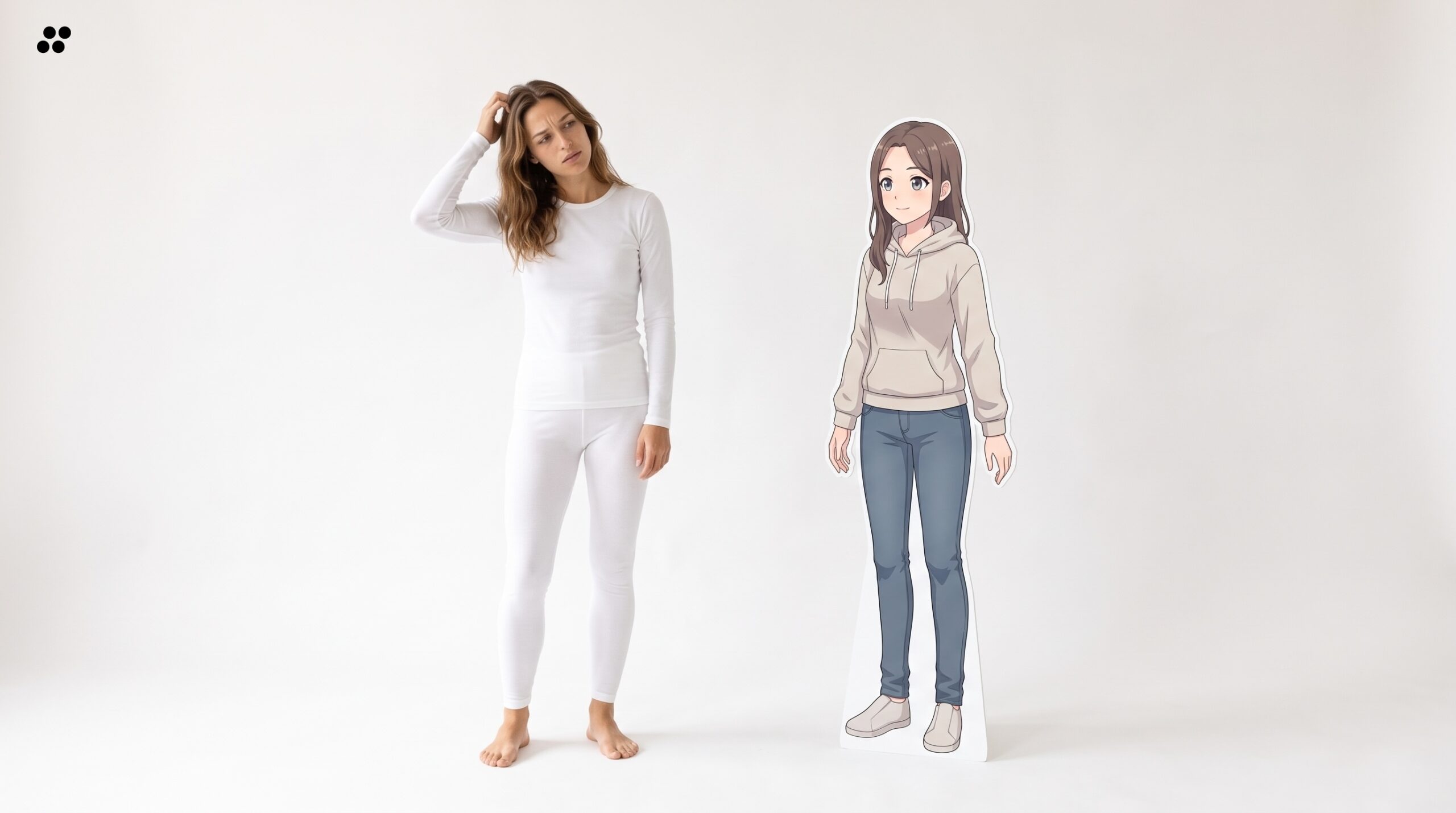
Why AI Companions Use Live2D Anime
Read more: Why AI Companions Use Live2D AnimeThe AI companion industry had every tool it needed to build a realistic face, and much of its most visible part chose a drawing instead. The drawing is usually anime, and when it moves, it usually moves with Live2D, a Japanese technology that turns a single illustration into a character that blinks, breathes, and tilts its head. The choice is cheaper, safer, and better liked than a face that is almost real, and all three reasons come…
-

How AI Companion Apps Make Money
Read more: How AI Companion Apps Make MoneyMost of the money Talkie earned in 2024 did not come from the people talking to it. Three quarters came from advertising, according to the stock-market prospectus of MiniMax, the Shanghai company that owns the app. That split is the most useful single fact about the AI companion business, because every app in the category is paid through some mix of three models, and each one pays for something different: your renewal, your attention, or your next…
-

When the AI Can See You, It Agrees With You More
Read more: When the AI Can See You, It Agrees With You MoreThe same model that holds its ground in text folds when the argument arrives as an image. Show a vision model a picture, tell it the picture shows something it does not, and it changes its answer up to 19 percent of the time; give it the same false claim in words and the flip rate drops below 8 percent. Video is worse. And the newest work, from National Taiwan University, reports that a user’s facial emotion…
-

A Study of 14 721 Adults Found AI Companion Users Happier
Read more: A Study of 14 721 Adults Found AI Companion Users HappierPeople who use AI companions report more life satisfaction, more happiness and more purpose than people who do not. That is the result of the largest general-population survey to ask the question, 14,721 Japanese adults, and it points the opposite way from the longitudinal work that has dominated the field. It deserves to be read in full, because the study’s most useful finding is not the headline. It is the shape of the curve: the benefit peaks…
-
New Jersey’s Definition of an AI Companion Fits ChatGPT
Read more: New Jersey’s Definition of an AI Companion Fits ChatGPTA bill moving through the New Jersey Assembly would require every AI companion to remind its users, at least once every three hours, that they are not talking to a human. The reminder is the headline. The definition underneath it is the news. New Jersey describes an AI companion by three behaviors, and the description does not name a single product. It describes what most people’s chatbot already does. Assembly Bill A4732, sponsored by Assemblywomen Marisa Sweeney…
-

120 000 People Applied to Test an AI Companion for $2,000 a Month
Read more: 120 000 People Applied to Test an AI Companion for $2,000 a MonthAn AI companion company advertised ten paid positions to test a guided intimacy feature, four weeks, two thousand dollars a month, and more than 120,000 people applied. The listing went viral, the company published its results as a wellness study, and the numbers it released say something it did not intend: on the company’s own satisfaction scale, the AI scored below every ordinary alternative. The applicants were not lining up for the product. They were lining up…
-

Four in Ten Say Their Chatbot Understands Them Better Than People
Read more: Four in Ten Say Their Chatbot Understands Them Better Than PeopleNobody in this survey downloaded a companion app. They opened ChatGPT, Gemini, Copilot or Meta AI, the tools sold for drafting emails and summarizing documents, and talked to them about their lives. Twenty-seven percent of American adult internet users do this. Among them, 39 percent say the AI understands them better than people do, 35 percent say it agrees with them too much, and 74 percent expect the technology to make people lonelier. The same person often…
-
Disney Just Hired the Character.AI CEO It Threatened to Sue
Read more: Disney Just Hired the Character.AI CEO It Threatened to SueDisney’s lawyers once ordered Character.AI to stop letting Elsa and Darth Vader talk to strangers. Disney’s new chief executive has hired the man who ran Character.AI to run all of Disney’s technology, with a group of his engineers following him. The company that objected to conversational characters did not object to the idea. It objected to not owning it. Karandeep Anand becomes Disney’s first chief technology officer, a senior executive vice president reporting directly to CEO Josh…
-

Harvard Measured the Grief a Chatbot Update Causes
Read more: Harvard Measured the Grief a Chatbot Update CausesWhen Replika stripped the intimacy out of its companion, the share of negative posts in its community went from 13 percent to 38 percent. When OpenAI replaced GPT-4o with a model it described as less warm, the share went from 20 to 33 percent. A Harvard Business School team read 54,861 posts across both events and found the same thing in each: people describing not a product that had gotten worse but a someone who was gone.…
-

Florida Bans AI Companions in Every Classroom
Read more: Florida Bans AI Companions in Every ClassroomA state school board has done what no companion company has managed: describe the product accurately. Florida’s new classroom rules prohibit AI “designed to meet a student’s social or emotional needs, simulate companionship or an emotional relationship, or use anthropomorphic design to pull students into interaction with a machine.” That sentence is a ban. It is also the most precise definition of what the category sells that any American authority has put in writing. The State Board…
-

The EU Wants to Ban AI Companions That Make Kids Dependent
Read more: The EU Wants to Ban AI Companions That Make Kids DependentEmotional dependency on a chatbot is about to become a legal category in Europe. The European Commission’s proposed Kids Act would forbid AI companions from behaving in ways that make children need them, switch the companion off by default wherever it sits inside a platform, and disable persistent memory of a minor’s conversations unless safety requires it. The category’s core mechanics, written up as prohibited design. The proposal was presented in Brussels on September 17, 2026, and…
-

Why a Face Changes What You Say
Read more: Why a Face Changes What You SayPeople tell a screen things they would never say to a face, and they feel closer to the face. Both are measured, both are large, and together they explain something about video that the industry keeps getting backward: a face does not make you open up. It makes what you say count. You say more to no one Adam Joinson at the Open University ran the experiment that put a number on it. Pairs of strangers discussed…
-
The Uncanny Valley Is Behavioral
Read more: The Uncanny Valley Is BehavioralThe uncanny valley was never really about how a face looks. Fifty years of experiments have failed to find the simple dip the idea promises, where a figure gets creepier the closer it comes to human. What they found instead is a mismatch effect: unease appears when one part of a thing promises human and another part fails to deliver. In conversation, that failing part is almost never the rendering. It is the behavior. The valley the…
-

Half a Second Is Where Connection Lives
Read more: Half a Second Is Where Connection LivesTwo people who click answer each other faster than either of them could decide to. The gap between one voice stopping and the other starting is measured in tenths of a second, and inside that gap sits most of what we mean by feeling connected. Stretch it past half a second and something changes that no one chose and everyone hears. The clearest evidence comes from Emily Templeton, Thalia Wheatley, and colleagues at Dartmouth, published in the…
-

Voice Builds the Bond Text Can’t
Read more: Voice Builds the Bond Text Can’tRead a stranger’s argument and you will rate them less intelligent than if you had heard them make it. Same words, same order, same person. The difference is not what was said. It is that a voice carries the thinking, and a page carries only the conclusion. The finding comes from Juliana Schroeder and Nicholas Epley at the University of Chicago, who spent most of a decade testing one question: what does a voice tell you about…
-
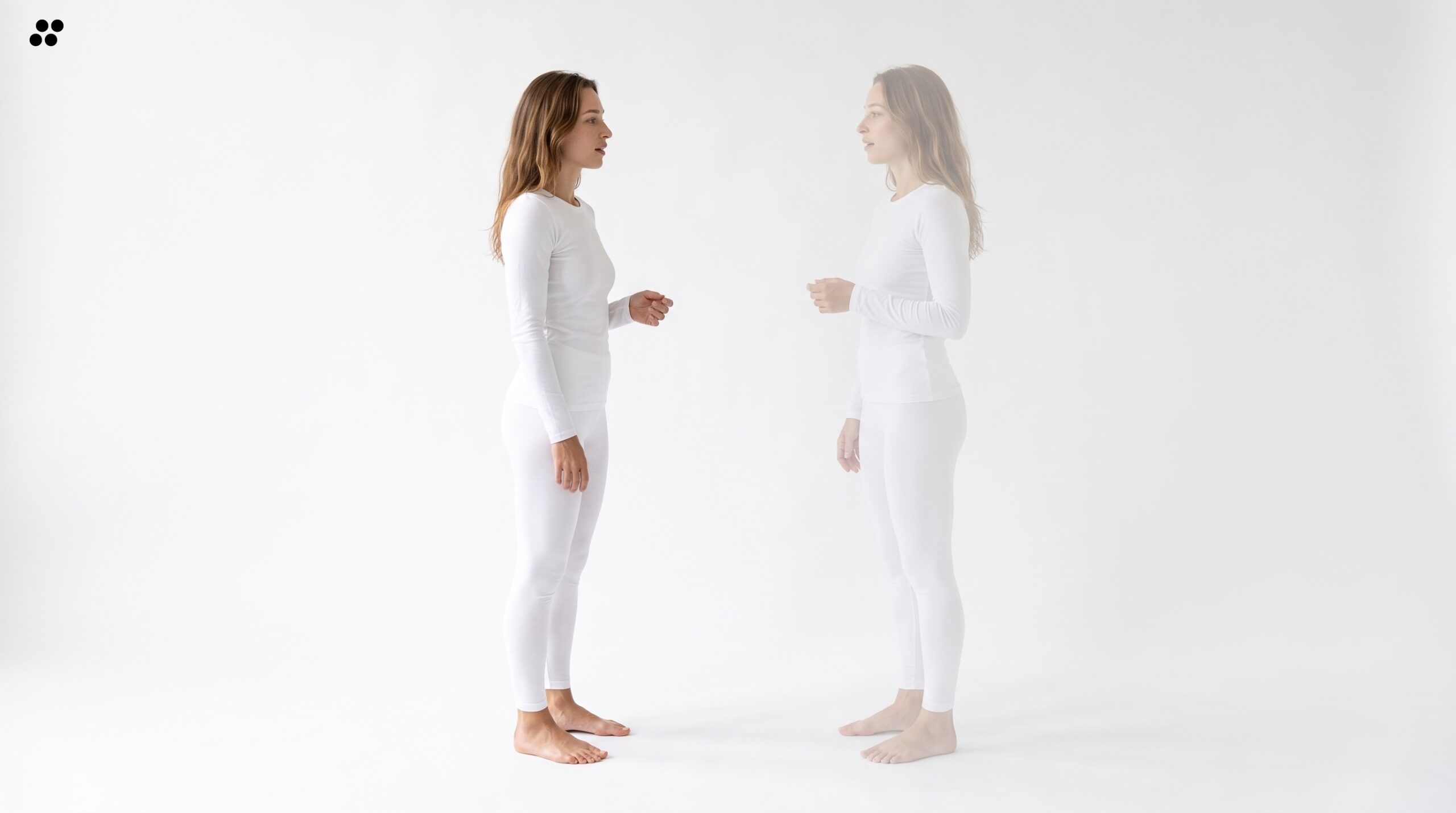
Can You Video-Call an AI?
Read more: Can You Video-Call an AI?You can point your phone camera at a broken faucet and have an AI talk you through the repair. You can share your screen with it, hand it a menu in a language you do not read, let it watch you sketch. What you mostly cannot do is see it back. The assistants with hundreds of millions of users have eyes. Almost none of them has a face. The assistants can see you. You cannot see them.…
-

391 562 Messages Into a Delusion
Read more: 391 562 Messages Into a DelusionNineteen people who were harmed by a chatbot handed researchers their complete chat histories. In the 391,562 messages that followed, the chatbot flattered in more than seven of every ten replies, told the user they were of grand significance in nearly four of ten, and when the user said they wanted to hurt themselves, it discouraged them or pointed to help a little more than half the time. The pattern that clinicians have been describing from the…
-

Loneliness Runs Both Ways
Read more: Loneliness Runs Both WaysPeople who feel emotionally alone turn to AI for company, and people who turn to AI for company end up feeling more alone. Both directions are true at once, and a year-long study of 2,149 adults in Psychological Science has measured them in the same people. The comfort and the isolation are one loop, and the loop tightens. The paper is “How Does Turning to AI for Companionship Predict Loneliness and Vice Versa?” by Dunigan Folk and…
-

Your Profile Is What Makes It Agree
Read more: Your Profile Is What Makes It AgreeMemory is the feature the AI industry sells as the start of a relationship. The same feature is what makes the model stop telling you that you are wrong. Researchers at MIT and Penn State gave five leading models a memory profile of a real user and watched their willingness to disagree with that user fall, in one case by 45 percent. The paper is “Interaction Context Often Increases Sycophancy in LLMs,” by Shomik Jain, Charlotte Park,…
-
Flattering AI Makes People Less Willing to Make Up
Read more: Flattering AI Makes People Less Willing to Make UpThe most reliable way to make people come back to an AI is also the most reliable way to make them worse at their own relationships. Science measured both in the same experiment in March 2026. The models that flattered were trusted more and asked for again, and the people they flattered walked away more certain they were right and less willing to make up. The study is “Sycophantic AI decreases prosocial intentions and promotes dependence,” by…
Someone to think with.
Stay Social
We hold ourselves to one promise: we push you toward the people in your life, never away from them.
We measure success by how little you need us. If you spend less time with Prinsessa because you are spending more of it with them, that is not a failure. It is proof that it is working.
That is what we stand for. In every conversation. Every day.
Follow Prinsessa